Scaling the Voluntary Carbon Market: Beyond Access, and Beyond Carbon
The voluntary carbon market is moving beyond carbon. And this offers the opportunity not just for massively increasing its scale, but also for rethinking the relationship between buyers, producers and intermediaries.
Carbon projects have always offered more than the carbon they remove. Now, attributes once treated as co-benefits are playing a more central role, and attract buying teams well beyond sustainability. Project developers able to collaborate with customers to shape tailored climate interventions stand to benefit greatly, and will play a huge role in the next evolution of purchases.
Buying Carbon, and Buying Beyond Carbon
At CUR8, we build tailored portfolios of climate interventions for our buyers. Historically, the majority of these have been focused on carbon dioxide removal (CDR); delivering a set amount of carbon dioxide removed from the atmosphere by a given date. Other preferences, like project quality, geography or targeted co-benefits, played an important role in the construction of these portfolios, though usually came as a secondary preference. Customers were primarily buying carbon.
As the market has evolved, other purchasing strategies have emerged, in which buyers prioritise the benefits of a purchase beyond the carbon itself. They are increasingly buying beyond carbon; the value lies as much in the credit as a commodity as in the strategic value of a project. Where regulatory incentives to purchase carbon are less clear, other incentives to back projects take precedence. These could include a desire to back more nascent technologies, deliver targeted social or environmental change, or ensure tighter resilience within a supply chain. The narrative behind a purchase is more important than ever; the level of customisation increases, and the scope of a purchasing strategy extends.
As a result, the scope of our work has grown to stretch across a spectrum of climate interventions. This ranges from the immediate carbon impact of a spot CDR or superpollutant credit, to the long term strategy required to make an insetting investment, or a purchase designed to catalyse a sector.
From Brokering Access to Enabling Collaboration
As our scope of work changes, so does the core value we offer to our customers as an intermediary. In a market where most corporates looked solely for credits, more of an intermediary’s value was tied to a binary assessment of a project, and its ability to deliver credits on time. The asset looked more like a commodity, so more of the value lay in being able to access it. Intermediaries were protective of the details they shared with their customers and of their relationship with project developers. This made sense when the core value offering was access to a shortlist of approved projects.
In a market where a focus shifts beyond carbon, the value of an intermediary shifts beyond access. The incentive to protect buyer and supplier relationships changes, in favour of creating an environment more conducive to collaboration. Buyers need to understand more about the project they are buying from, and the broader benefits their purchase could enable.
Project attributes previously viewed as additional co-benefits become more central to a purchasing motivation, and customers need greater visibility of how these are delivered. The knowledge alone that a project will positively impact water cleanliness, soil health, or air quality may suffice in a tonne-for-tonne transaction; a buyer making a more strategic purchase needs to understand how this improvement can be monitored and reported on. Where buyers may have previously had preferred geographies or pathways, they may now look for projects located within their supply chain, that use a feedstock relevant to their business, or those that work with the same communities that they do.
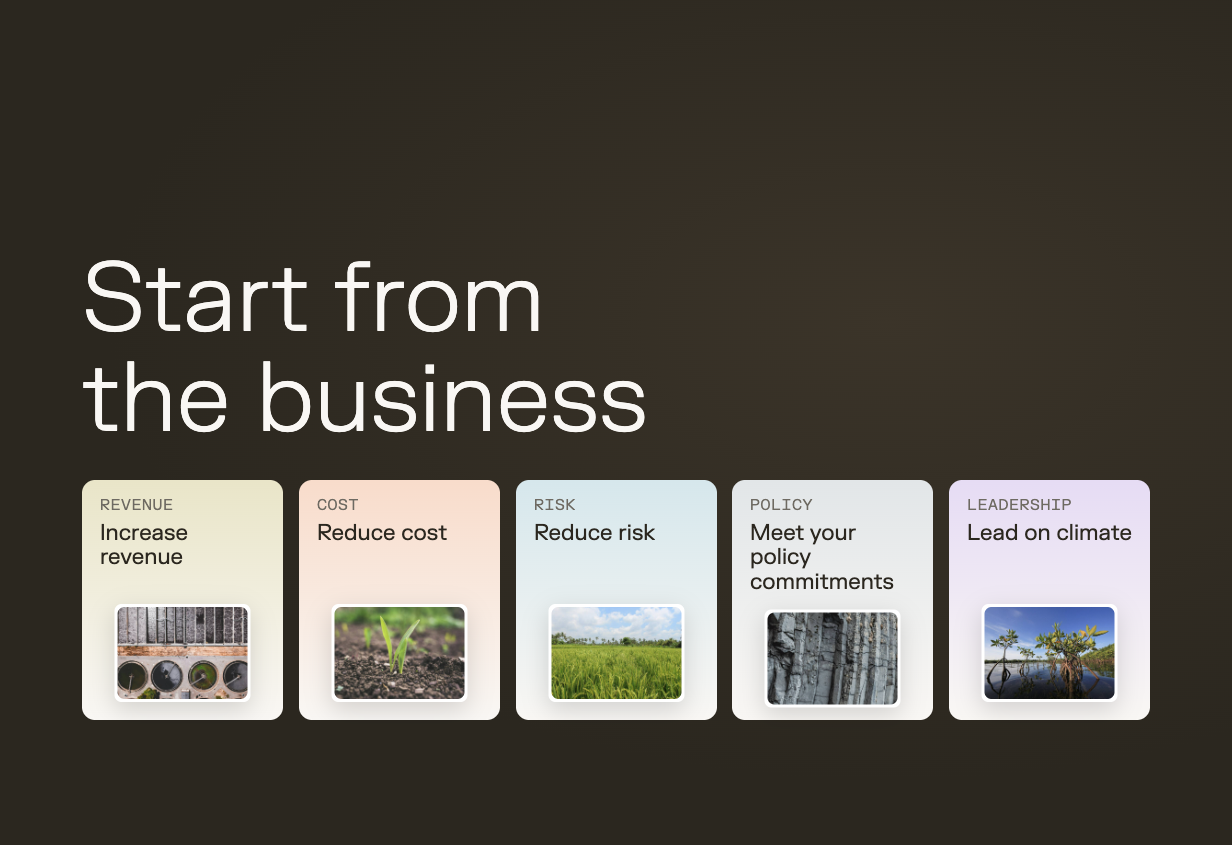
We have spent a long time assessing factors beyond carbon removal, and used this to help buyers find the projects that best align with them. We recently launched Navigate to bring this to the centre of a buying process. Companies start by visualising all of their business activities, and build strategies around the interventions they need to take. When it comes to purchasing, they can pinpoint the credit types and projects that will help them achieve these.
What this means for Project Developers
In a nascent market, the first projects to issue credits within a given pathway benefit greatly from doing so, and deservedly attract a lot of buyer attention. However, as the market develops, project quality across pathways continues to improve, methodologies tighten, and technologies mature, it may be harder for project developers to differentiate themselves on their ability to issue credits alone.
Project developers already know this. Many of them have been through rigorous diligence processes, created, measured and promoted the co-benefits of their projects, and worked closely with buyers to understand the intent behind each purchase. Developers should expect to share a greater level of detail with a larger number of buyers, be able to report on a wider number of benefits, and expect a level of buyer input on the development of projects. And in a world of higher collaboration and greater transparency, they should expect the same in return.
Increased collaboration with buyers should help reinforce trust in the market, and improve visibility on the wider benefits of a project. Projects able to share data with buyers beyond the carbon impact of their projects benefit greatly from the relationship this builds. Those able to do this for newer use cases like insetting are quickly learning what they need to report on, the types of claim their customers can make, and how to position themselves as long term partners for buying teams well beyond sustainability. If the VCM has not scaled as deeply as we had expected, beyond carbon offers an opportunity for it to scale far wider.
In a market driven by access, there is an incentive to back the favourite. Capital is concentrated towards the largest projects, with the greatest chance of success, and each buyer competes for volume allocation, exclusivity, and the best pricing. While this dynamic is unlikely to disappear completely, a more collaborative market allows buyers to make more informed buying decisions from a broader field of developers, to bring about impact far beyond carbon. A market beyond carbon may take time to build, and will undoubtedly require more liquidity to scale, but could ultimately benefit more buyers, developers, communities and environments than ever before.

November 19, 2026